Blog
ADHD & Digital Life
"Plansturbation" and Tools Galore
We like to plan to do things. A lot. We've thought about that, and how to match the planning to doing.

Jack Hannaway
Focus Operations
Dec 14, 2025

Imagine this: It’s Monday morning, you sit down with a fresh cup of coffee, determined to tackle your project. But first, you decide to “get organized.” Two hours later, you’ve created a beautifully color-coded plan, optimized your to-do app, and even watched a couple of productivity YouTubers for inspiration. The catch? You haven’t actually started the project. If this scenario hits home, you might be guilty of plansturbation. (Don’t worry, we’ve all been there, and no—it’s not that kind of self-love!).
So, what is plansturbation? The term itself is a cheeky mashup of “planning” and “masturbation,” capturing the self-indulgent loop of endless planning with no execution. In plain terms, it’s when you get stuck in planning mode instead of actually doing the thing you’re planning for. The earliest known reference to “plansturbation” dates back to a 2017 Urban Dictionary entry, defining it as “to over-complicate a situation through excessive or unnecessary planning, to the point that progress or enjoyment is hindered”. In other words, it’s planning gone overboard – so much so that it actually stops you from moving forward. Initially, this witty word was used in general contexts (think of an overzealous manager making 17 versions of a project plan, or a parent who plans a family vacation to death such that it’s more work than fun). But more recently, ADHD communities and productivity circles have embraced “plansturbation” as the perfect label for a common trap: fiddling with plans, systems, and tools ad nauseam while actual work gathers dust. One redditor with ADHD confessed that they’d spend hours building the “perfect” Notion workspace, tweaking task colors and watching productivity videos – only to realize none of the real work got done.
The Allure of Planning (vs. The Reality of Doing)
Why do smart, motivated people (especially those of us with ADHD) fall into this cycle of over-planning? Simply put, planning feels good – it gives us a hit of dopamine and a comforting illusion of progress. As one blogger quipped, “when life feels chaotic, building a new system feels like control”. There’s a thrill in crafting the perfect plan: it’s organized, it’s neat, it’s full of potential. In fact, ADHD brains are notorious for craving novelty and structure, so new planners and shiny productivity apps can feel almost irresistible. Setting up that new app or reformatting your to-do list scratches an itch – you’re doing something, and it feels productive. We’re customizing, organizing, learning something new. In the moment, it feels like we’re taking massive action. (There’s even a term for this: “procrastiworking” – doing work-like tasks to avoid the real task at hand. If you’ve ever reorganized your desk instead of writing a report, you know the deal.)
For people with ADHD, this allure of planning can be extra strong. Our brains light up at anything new or interesting, and we tend to seek quick dopamine boosts. Tweaking a workflow or researching the “best” way to do something provides that instant reward, whereas the actual task may not. Plus, planning gives a sense of control in a world that often feels chaotic. As someone on an ADHD forum shared, “planning gives me this illusion of control… My brain gets high off the idea of being organized”. It’s comforting to think that if we just get the perfect plan or system, execution will be a breeze.
Then comes the hard part: execution. That’s when the pleasant daydream shatters. For many of us with ADHD, starting and following through on tasks is the real challenge, tied to our beloved nemesis – executive dysfunction. The same redditor described the crash that follows the planning high: “When it’s time to actually follow through, the executive dysfunction kicks in. The fear of not executing perfectly paralyzes me, so instead of doing anything imperfectly, I return to what feels safe: more planning”. Ouch. In a sense, plansturbation is procrastination in disguise. It’s much easier to keep fine-tuning a plan (where everything can be perfect, in theory) than to dive into the messy reality of doing the work and possibly falling short. Psychological research backs this up: procrastination often isn’t pure laziness, but a coping mechanism to avoid uncomfortable emotions or fear of failure. One study found that in ADHD, procrastination frequently serves as a way to momentarily escape a task that feels too daunting or aversive. We tell ourselves, “I’m not avoiding the project, I’m preparing for it!” – and that little self-deception reduces our stress in the short term. Of course, in the long term, the stress piles up when deadlines loom and nothing’s done.
If this sounds painfully familiar, take heart: you’re definitely not alone, and not doing it because you’re “lazy.” ADHD-related procrastination is strongly linked to the way our brains handle attention and motivation, not a character flaw. In fact, one study noted that procrastination in ADHD was more correlated with inattention issues (difficulty focusing on what needs to be done) rather than mere impulsivity. So it makes sense that we often jump to something else stimulating (like a new plan or tool) when we can’t lock our focus onto a less exciting task. Planning becomes a refuge: it’s structured, it’s safe, and it tricks us into feeling productive. It’s no wonder that tweaking your task system for an hour can be far more appealing than grinding through an hour of actual tasks that might be boring or overwhelming.
Planning vs. Progress: Finding the Balance
Let’s be clear: planning itself isn’t a bad thing. In fact, a good plan can be incredibly helpful, especially for ADHD minds. A solid plan can break a big project into manageable steps, help anticipate obstacles, and keep you from forgetting important to-dos. There’s a reason we’re often advised to “make a plan” – as the saying goes, “Failing to plan is planning to fail,” right? The key, however, is that planning should be a launchpad for action, not an endless loop. Planning is supposed to serve execution, not replace it.
So how do we know when our planning crosses the line into, well, plansturbation? Here are a few tell-tale signs:
Plans on plans on plans: You have multiple versions of the same plan or schedule, revised over and over, but the actual project hasn’t moved an inch. (If you’ve drafted five iterations of your workout routine or business idea and haven’t started any of them, this is you!)
Tool tinkering: You spend more time organizing your productivity tools (apps, calendars, notebooks, etc.) than actually using them to get stuff done. Your to-do app is a work of art… and also a graveyard of unchecked tasks.
Endless research: You dive into “one more” article or video to optimize your approach, convincing yourself you need just a bit more info before you begin. Weeks later, you’re practically an expert on the topic – yet you haven’t taken the first step in real life.
“Not yet, it’s not perfect”: You keep adding tweaks and details to your plan, telling yourself you’ll start once the plan itself is flawless (news flash: that moment never comes). Or maybe you’re waiting for the “perfect” moment – Monday morning, the first of the month, your birthday, next New Year’s – to launch into action. Meanwhile, the present moment is slipping away.
If you caught yourself nodding to any of the above, you’re in the plansturbation zone. Trust me, I live in that zone more often than I’d like to admit. The danger here is that we feel like we’re making progress, so it tricks our brain. As one LinkedIn user put it, “Planning ≠ progress. Planning is only useful if it gets you closer to doing. The second it becomes a performance, it’s a liability”. In business terms, excessive planning turns into “productivity theater” – it looks cool on the surface, but it’s not delivering real outcomes. Or to use a vivid analogy from an ADHD blogger: it’s like standing at the edge of a pool fussing with your goggles for an hour, and never actually jumping in to swim. At some point, you’ve got to take the plunge.
On the flip side, how do we ensure planning stays productive and doesn’t slide into paralysis? It helps to remember what useful planning looks like. Useful planning yields a clear roadmap so you can start working sooner, not later. It sets you up to tackle that first step and keeps you on track, without being overly complex. If you spend a reasonable amount of time planning (proportional to the size of the task) and then promptly move into action, congratulations – you’re planning, not plansturbating. But if your planning doesn’t lead to any action within a reasonable timeframe, then sorry my friend, that’s plansturbation, not planning. In short: progress = plan + action. Too much plan and zero action = no progress.
It’s a nuanced balance, especially for ADHD folks. We need some structure to corral our scattered thoughts – a bit of planning goes a long way to prevent chaos. Yet too much structure or overthinking can overwhelm us and trigger the very paralysis we set out to avoid. ADHD experts often talk about “analysis paralysis,” where you’re so overwhelmed by choices or information that you freeze up and do nothing. Plansturbation is a close cousin: we compulsively do something (plan/organize) but still avoid the important thing, ending up effectively frozen in a loop. The cost isn’t just lost time; it’s also the mental exhaustion and guilt that come with spinning your wheels. I know when I catch myself reorganizing my task list for the 100th time, I eventually get hit with that “oh no… I did it again” realization. Cue the frustration.
So if you’re recognizing these patterns, it might be time to step back and ask: Is my planning serving a purpose, or just providing comfort? A good litmus test is to ask, “What action is this plan leading me to, and when?” If you don’t have a clear answer, the plan might be serving as a cozy distraction. As hard as it is to hear, no amount of meticulous planning will accomplish your goals until you pair it with action. Or to put it more bluntly – we’ve got to stop plansturbating and start doing.
Breaking the Cycle: From Plansturbation to Productivity
Alright, we’ve identified the problem – how do we break free from the endless planning loop? Don’t worry, I’m not going to say “just do it” and leave it at that. (If it were that simple, I’d have done it right after buying my first planner labeled “ADHD PROOF ULTRA ORGANIZED SYSTEM 3000”… which now collects dust on my shelf.) Over time, through painful trial and error and lots of research, I’ve learned a few strategies that actually help curb the plansturbation habit:
Set strict planning limits: Give yourself a clear time box for planning a task or project, and stick to it. For example, if you’re preparing to start a report, maybe you allow 30 minutes to outline it. If you’re embarking on a bigger goal (say, launching a small business), you might allocate a few hours or a day to draw up a high-level plan. But once that time’s up, you must start executing – no endless extensions! This approach forces you to focus on the essentials and prevents you from vanishing down the rabbit hole of “refinement.” Personally, I even use a timer for this. Knowing there’s a ticking clock helps me avoid indulging in unnecessary details. Remember, an okay plan you act on is better than a “perfect” plan you never finish.
Embrace “good enough”: Perfectionism often fuels over-planning. We don’t want to start until we’re 110% ready, which of course never happens. The antidote is to deliberately embrace imperfection. Ask yourself, “Is this plan good enough to get me started?” If yes, then close the notebook or app and move on to the first task. You can always adjust as you go – plans aren’t set in stone. In fact, many productivity experts recommend iterative planning: do a little planning, then a little doing, then refine your plan based on what you learned, and repeat. You don’t have to map out every twist and turn of the journey in advance; you just need enough of a map to begin. Think of it like driving at night – your headlights only show you the next 200 feet, but that’s enough to keep moving forward and eventually reach your destination.
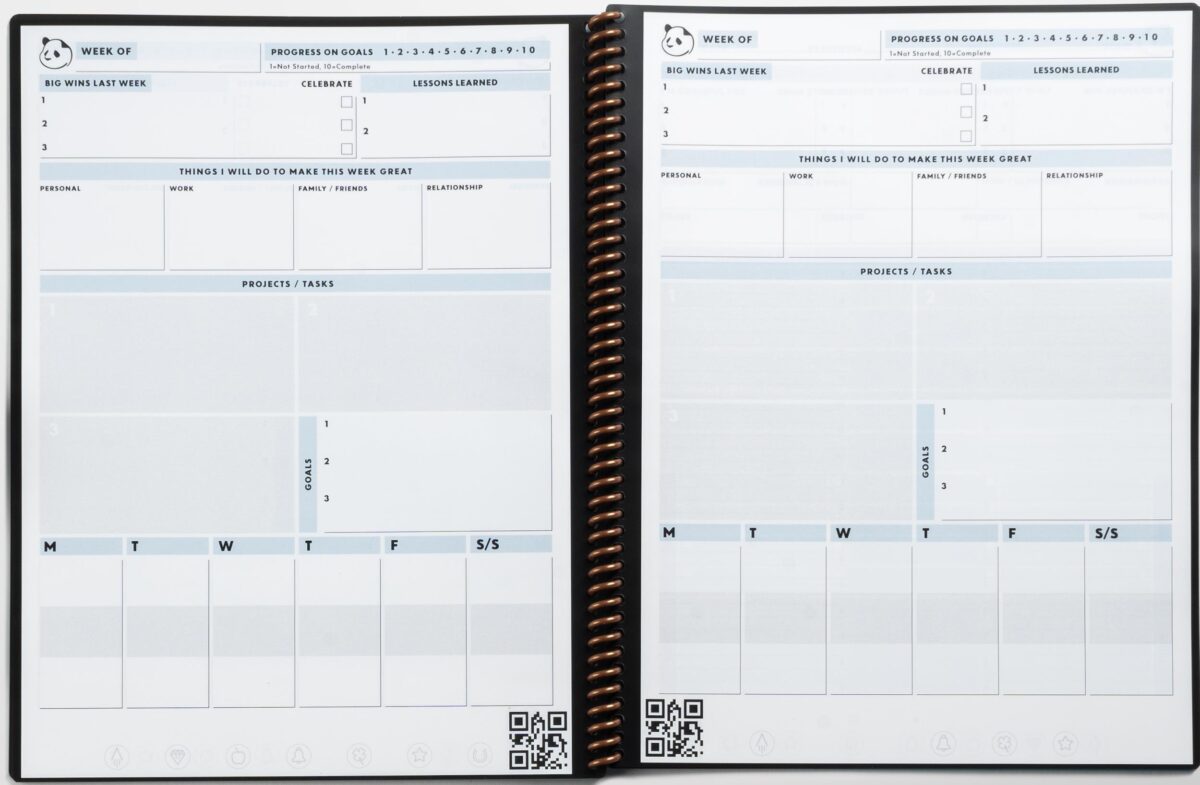
Prioritize action in your tools: If you find yourself overwhelmed with maintaining a complex productivity system, consider simplifying it. Some people with ADHD actually thrive with bare-bones or analog tools because there are fewer things to tweak and less visual overload. I’ll share a bit of my own experience here: I went on a grand tour of every to-do app, planner, and workflow under the sun. At one point, I had tasks in Trello, notes in Evernote, reminders in Google, a habit tracker on my phone, and a partridge in a pear tree. 😅 Instead of getting more done, I was spending all my time updating and syncing my multitude of “productivity” tools. Talk about counterproductive! These days I’ve found simpler is better. I ditched most of the digital bells and whistles and went back to basics: I use a Panda Planner (a paper planner) for my daily schedule and goals, a physical Pomodoro timer on my desk to keep me focused, and just one or two lightweight digital tools (Google Tasks and Apple Notes) for quick capture when I’m on the go. That’s it. And you know what? My productivity didn’t tank – in fact, it improved, because I spend way less time managing my system and more time doing the tasks. This isn’t to say you must use paper or a specific product, but do consider whether your fancy app is actually helping or just giving you another playground to procrastinate in. As an ADHD specialist notes, the best tools are often those with simplicity and low distraction design, not the ones with the most features. Sometimes, a plain notebook and pen (or a basic digital list) can trump an elaborate app, because you can’t endlessly customize a blank sheet of paper – you can only write on it and then act.
Accountability and tiny steps: One way to jolt yourself out of the planning comfort zone is to create immediate accountability. This could mean telling a friend or coach about what you’re going to do today (not what you’re going to plan, but what you will actually finish). For ADHD folks, having someone or something to answer to can light a fire under us. Also, make the first action ridiculously small. If you’ve been planning a big task for weeks, challenge yourself to spend just 5 minutes on it right now. Write one paragraph, do one chore, make one phone call – whatever it is, do a tiny piece of it. Often, that’s enough to break the inertia. Starting is the hardest part, so in a sense any start is a win. And once you’re in motion, you can build momentum. I literally have a sticky note on my desk that says, “What’s the smallest next step?” to remind me that progress can (and usually does) begin with something very minor. Celebrate that start! As the saying goes, “Well begun is half done.”
Lastly, let’s address the elephant in the room: the emotional side. Breaking out of plansturbation isn’t just about tactics; it’s also about mindset. It requires a bit of self-compassion and courage. We have to forgive ourselves for past false starts (all those plans that went nowhere – hey, they seemed like a good idea at the time). And we have to be brave enough to face our fear of failure. Because doing the thing for real means it might not turn out perfectly. The project might flop, the workout might be sloppy, the blog post might not get views (gulp 🙈). But not doing it at all – that guarantees zero progress. One mantra I’ve adopted is “Action breeds clarity.” No amount of thinking and planning will give the clarity that actually taking action will. Even if you stumble, you’ll learn something that will inform your next step. Or as one productivity enthusiast put it, execution beats productivity theater every time.
To wrap up, the goal is to find the sweet spot between planning and doing. Plan enough to guide you, then jump in and do. If you catch yourself endlessly polishing a plan, remember that real life is messier than any plan – and that’s okay. The perfect plan on paper means nothing if it never leaves the paper (or screen). Breaking the cycle of plansturbation is challenging, especially for ADHD minds, but it’s absolutely doable with awareness and some new habits. Start by noticing when you’re using planning as an avoidance tactic. Gently call yourself out, maybe even with a bit of humor – “Whoops, I’m totally plansturbating right now!” 😂 (I’ve said this to myself, out loud, alone in my office. It’s oddly motivating – and at the very least, it gives me a chuckle and breaks the tension.)
Remember, you’re not lazy or alone in this struggle. Many of us are riding the same struggle bus, notebooks and planner apps in hand. The next time you find yourself stuck in a cycle of over-planning, take a deep breath and try something from the tips above. Embrace imperfection, take that small step, and trust that you can adjust course as needed. The cure to plansturbation isn’t a better plan – it’s the courage to act on a decent plan and the willingness to learn from doing. As I often remind myself: The best plan is the one that gets you started. So let’s close those infinite tabs, put down the washi tape (if you know, you know), and get to work – one perfectly imperfect action at a time.
Jack Hannaway
Focus Operations
Share